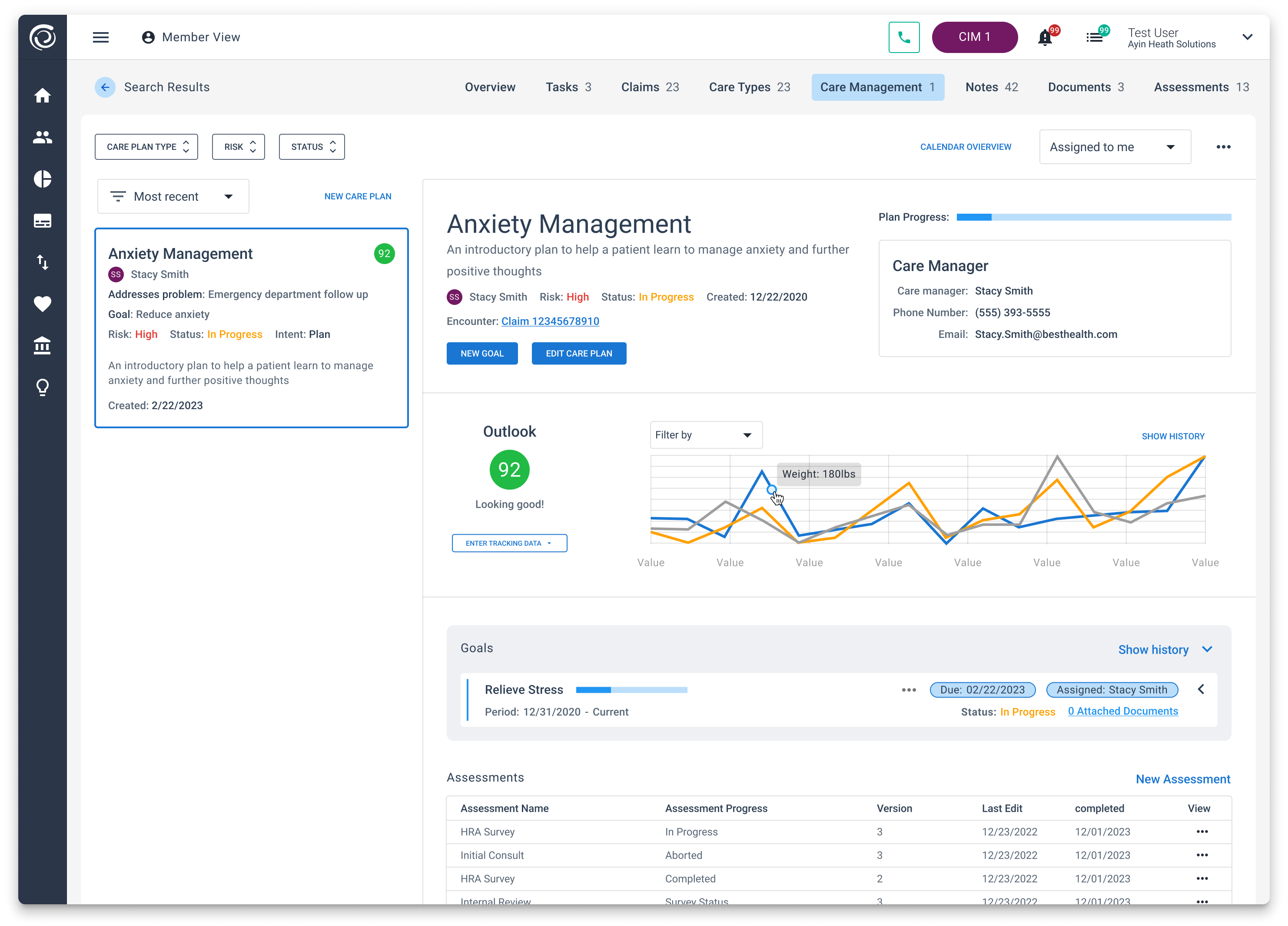
The problem
Care management is the collaborative process between health plans and providers: tracking, monitoring, and engaging high-risk members. Think a member admitted for heart failure. The team should get an alert, enroll them in a plan, and follow evidence-based interventions.
At kickoff we didn’t have a clear product vision. Feedback on existing solutions was blunt: some members were unintentionally falling through the cracks. I treated that as the real problem statement, not a slide about “engagement.”
“Our goal is to connect members with resources across healthcare services, social determinants, behavioral health, oral health, and other relevant areas, guiding them through the complexities of the healthcare system.” – External care-management SME
Research
- External SME partnerships
- Internal and external interviews
- FHIR CarePlan reference review
- Observational usability tests
- Listening labs
- 5-second tests and surveys
Research started with admitting we didn’t know care management well enough. I partnered with two external SMEs (one from a customer org, one from a partner company) and used the FHIR CarePlan structure to ground the data model.
Plan and provider partners defined success in plain language: member-specific outcomes, and reduced recidivism for high service users once they stabilize.
“Success is defined by member-specific achievements and also measured via reduced recidivism for high service users once they have been stabilized.” – Health plan / provider partners
What I owned
From early foundation work at Ayin (then PHTECH) through mocks, prototypes, and usability. I stayed close with engineering so design and development didn’t drift, and I ran multiple redesign loops with SMEs and broader customer partners before we expanded quantitative checks.
Approach
Help plans and providers keep high-risk members in view and connected to the right resources.
Goals from research: fix assessments as a dependency, monitor members so nobody is overlooked, enable self-configurable care plans, and report wellbeing metrics.
- Assessments and surveys are tightly connected to care management. Address that first.
- Keep members visible through care so people don’t drop out of view.
- Self-configurable care plans beyond the bare minimum CM basics.
- Reportable wellbeing metrics inside those plans.
I started with high-fidelity mocks from our atomic design system and FHIR fields so SMEs had something concrete to critique while interviews were still landing. Early feedback was honest: the information was there, but hierarchy and density were wrong. Two full redesigns later, broader customers and partners started testing well.

Design loops
Early mocks leaned hard on FHIR structure and the design system so we could move fast before every SME session. Dark mode existed even then. The first critiques said I was “in the ballpark, but not on the field”: content present, priority wrong.
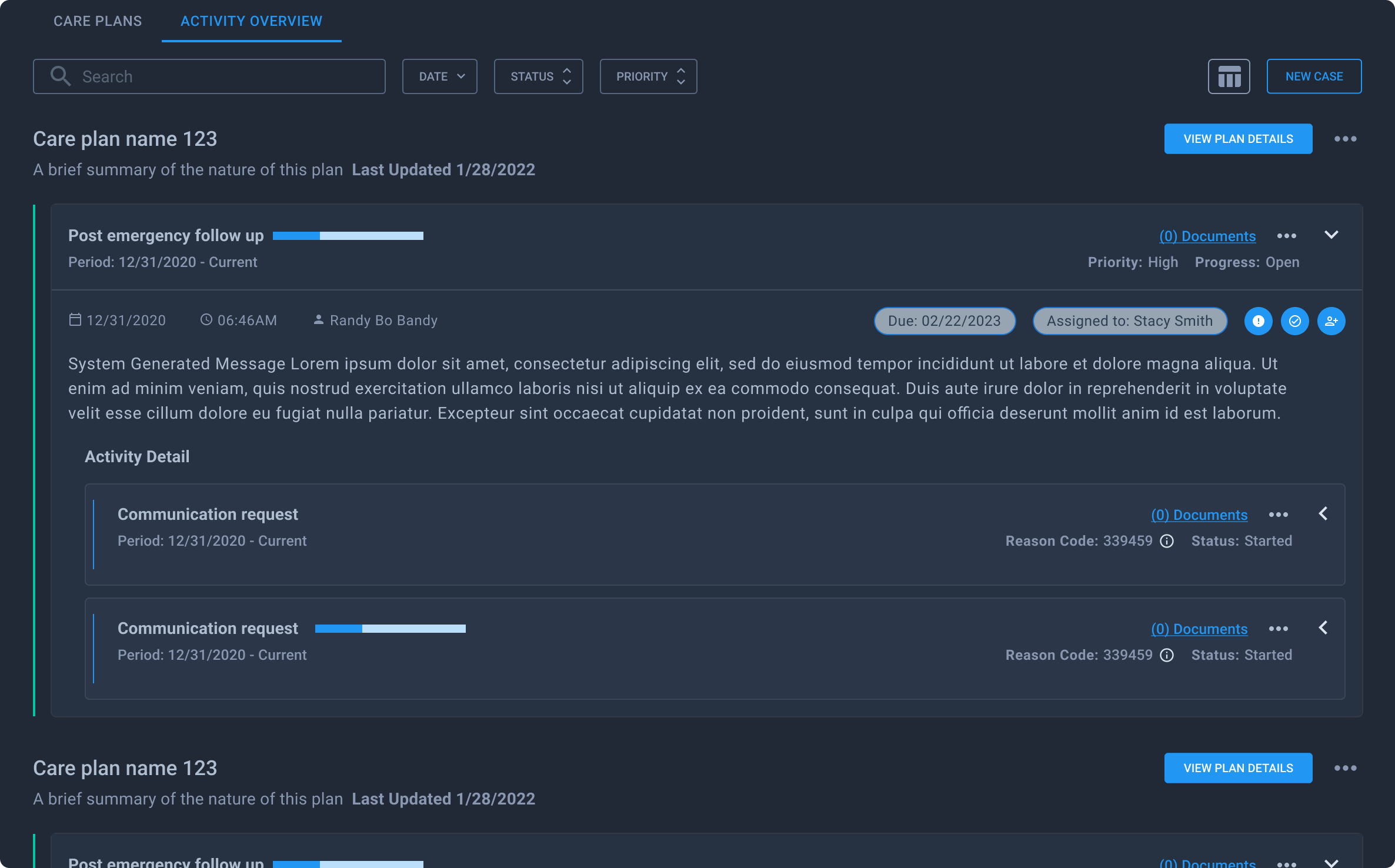
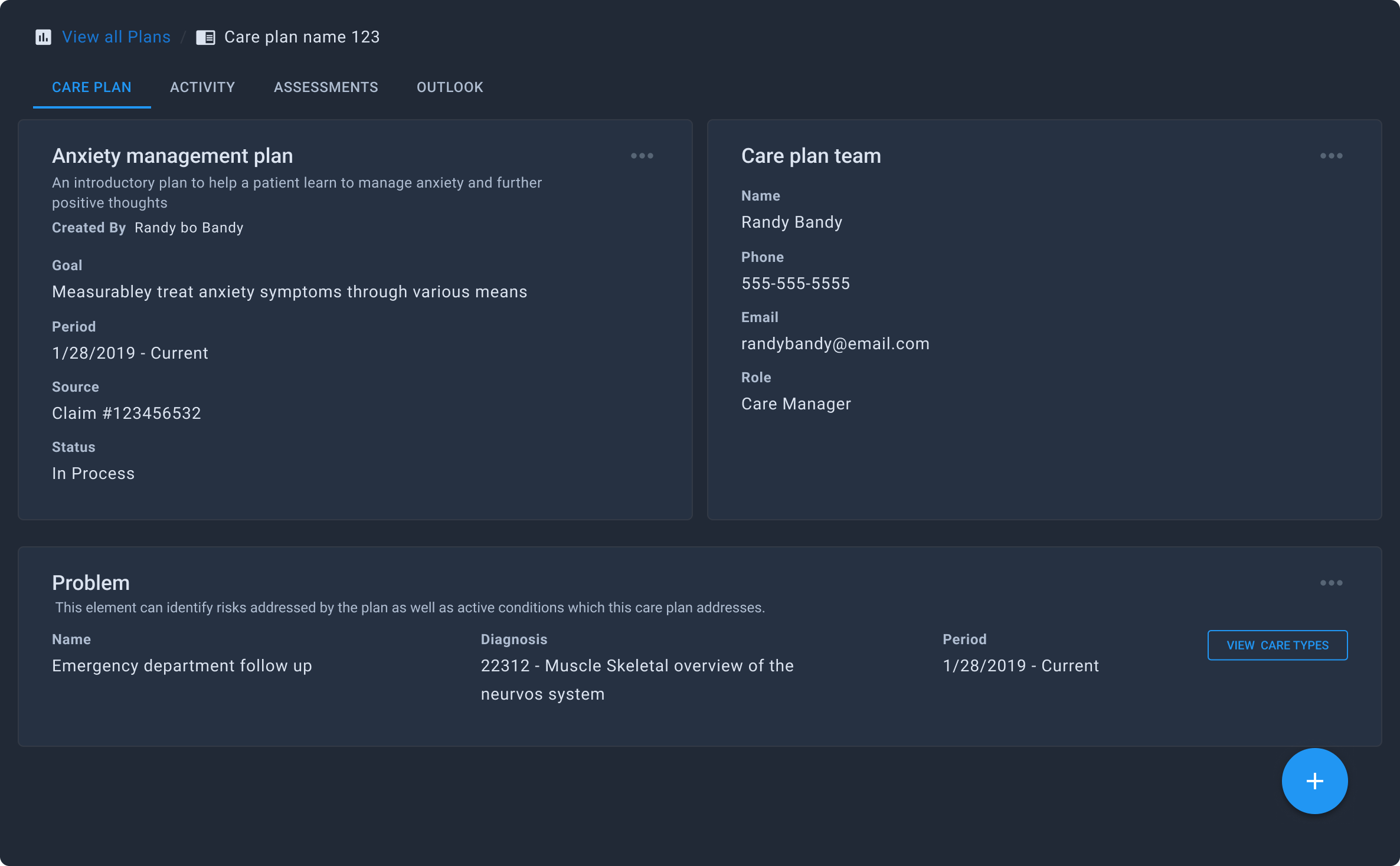
After more one-on-ones and usability sessions, layout started testing better. We expanded research to interested customers and external partners and mixed methods:
- Qualitative: one-on-one observational tests, listening labs
- Quantitative: 5-second tests, surveys, card sorting (~10-person pools)
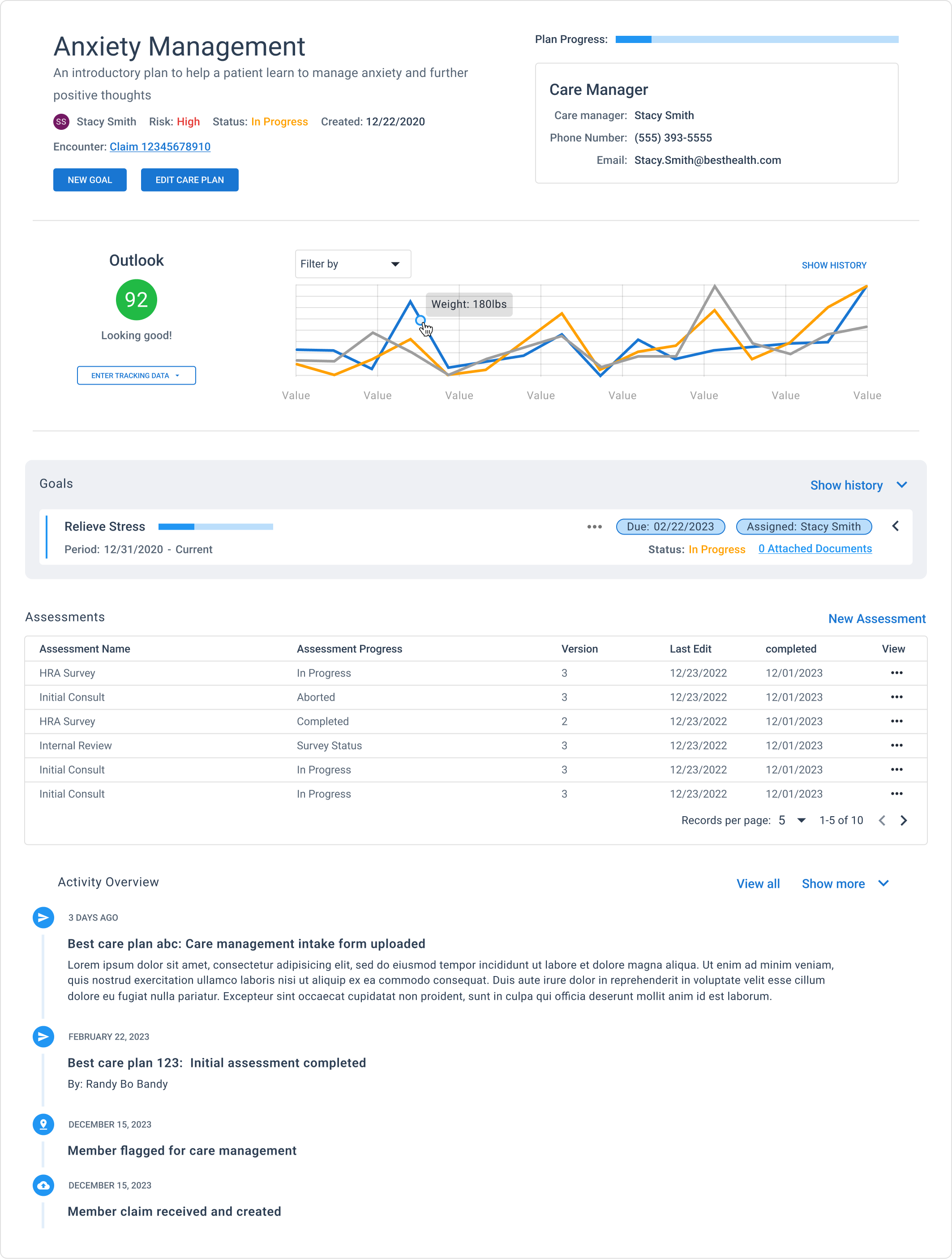
Results
The CM design phase paused pending more progress on configuration and assessments. I worked those in parallel rather than parking the whole problem.
Why this still matters
When the org doesn’t know a domain yet, the fix isn’t more polish. It’s honest research with people who do: SMEs, plan partners, provider partners. FHIR for the data bones, usability loops for the hierarchy, and parallel work on assessments and config so CM isn’t an island.